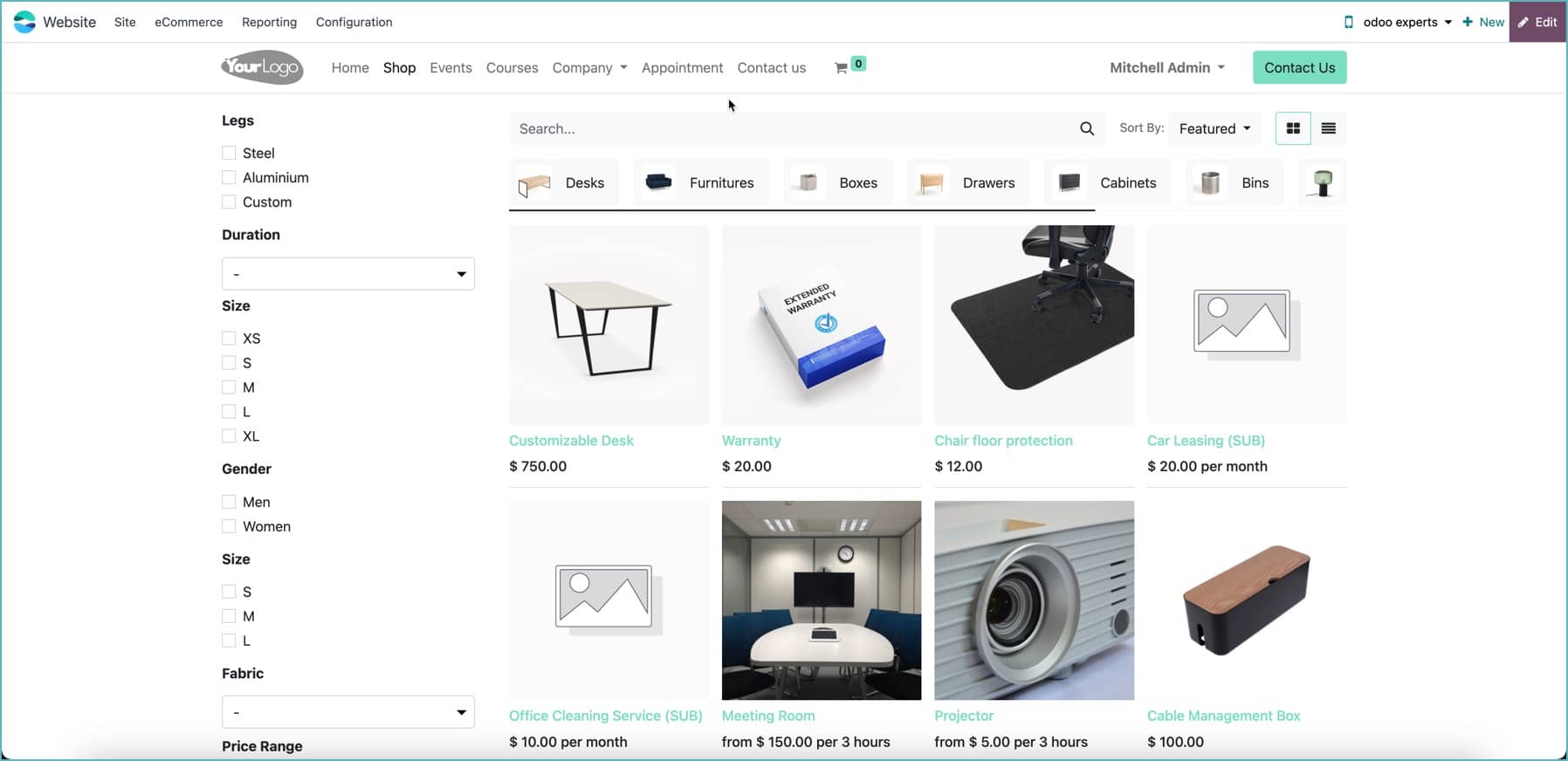
Odoo's focus on e-commerce
Odoo is placing more and more focus on e-commerce. If you are considering moving your webshop to Odoo, you need to make sure Odoo can help you succeed in organic search results. Google is an important source of traffic, and good SEO can deliver a lot in the long term, so it is your job to be ready for that.
How does Odoo compare to more established content management systems such as WordPress or Drupal? We discuss the basic SEO features, as well as some interesting extras. Let's get started!
Indexing
Without being indexable, you have no chance of ranking. Odoo offers the basic features to make sure your website is indexed quickly. Sitemaps are generated automatically, you can modify the robots.txt file, and there is an option to change the indexing settings. It is not easy to change the canonical URL, but the Odoo app store has apps that can help you with that if needed.
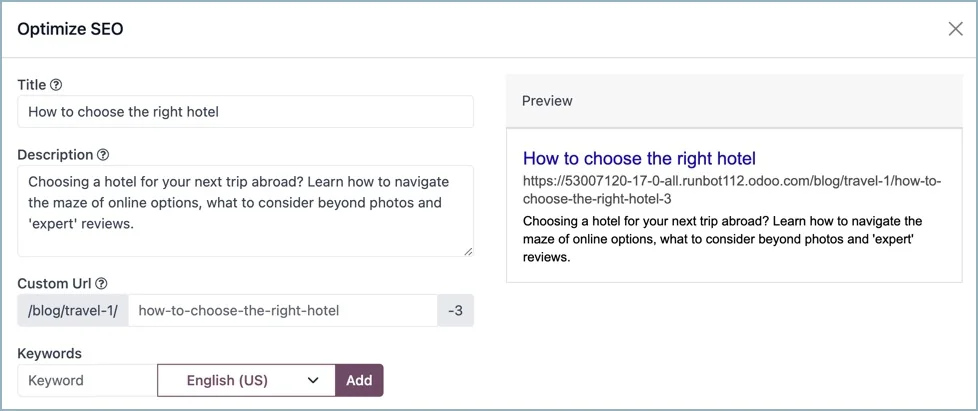
Titles and meta descriptions
Odoo generates a page title and meta description and gives you the option to override them if necessary. In addition, it lets you select images that appear in social media posts. Nothing special, but it covers all the basics.
Beyond the basics: Magic with keywords
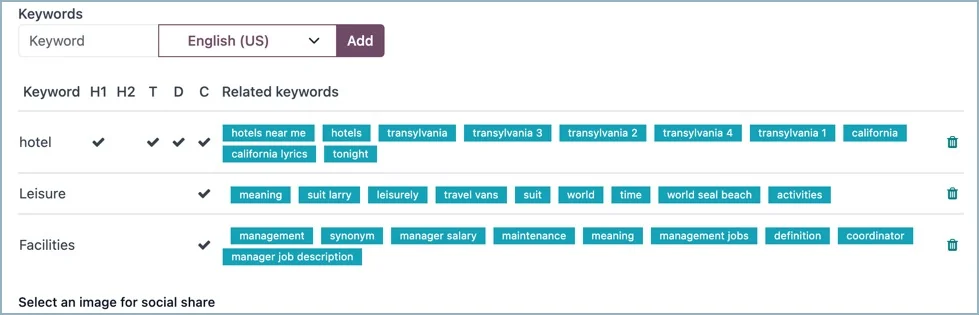
One of the most interesting things for SEO is the keyword tool that comes with Odoo. You can enter relevant keywords for the page, and the editor checks whether that keyword is present in the headings, text, title, and meta description. On top of that, it gives you a number of related keywords to add.
URL structure and redirects
The URL structure is nice and clean and allows you to customize the URL as you wish. One drawback: for products, it automatically adds the product ID. That makes the URL just a little less clean and short. Not a big issue, but it would be nice if that could be solved differently.
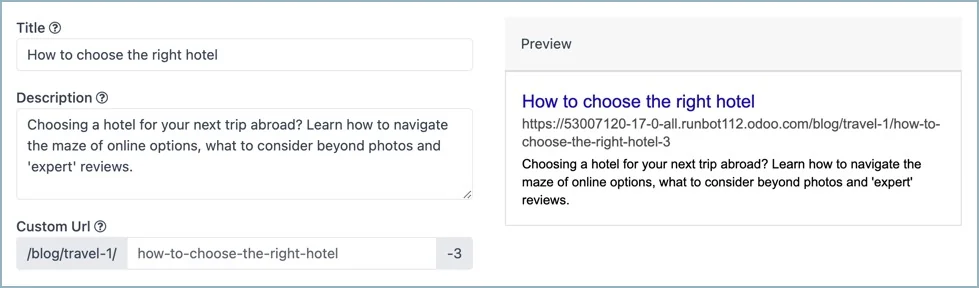
Unfortunately, there is no way to remove that '3' at the end.
If you change page URLs, Odoo automatically handles the redirects for you. This means you can safely change URLs without worrying about broken links.
International SEO
If you are targeting international markets, Odoo has you covered. It is relatively easy to set up multilingual websites, and with support for hreflang tags, you can easily target the right audience in search engines.
Structured data
Structured data helps your site stand out in the search results by showing price and availability details. Odoo handles this automatically.
Page speed
Since 2019, Google has announced that page speed and user experience are ranking factors, although they later admitted that their effect is very small. Nevertheless, having a fast-loading website that offers a good user experience is highly relevant - and not just for SEO.
Odoo recognized this early on and paid a lot of attention to creating a fast-loading site. Images are optimized automatically, CSS and javascript are kept small, and the site is responsive by default. Once again, it covers all the basics.
Google Search Console and Analytics
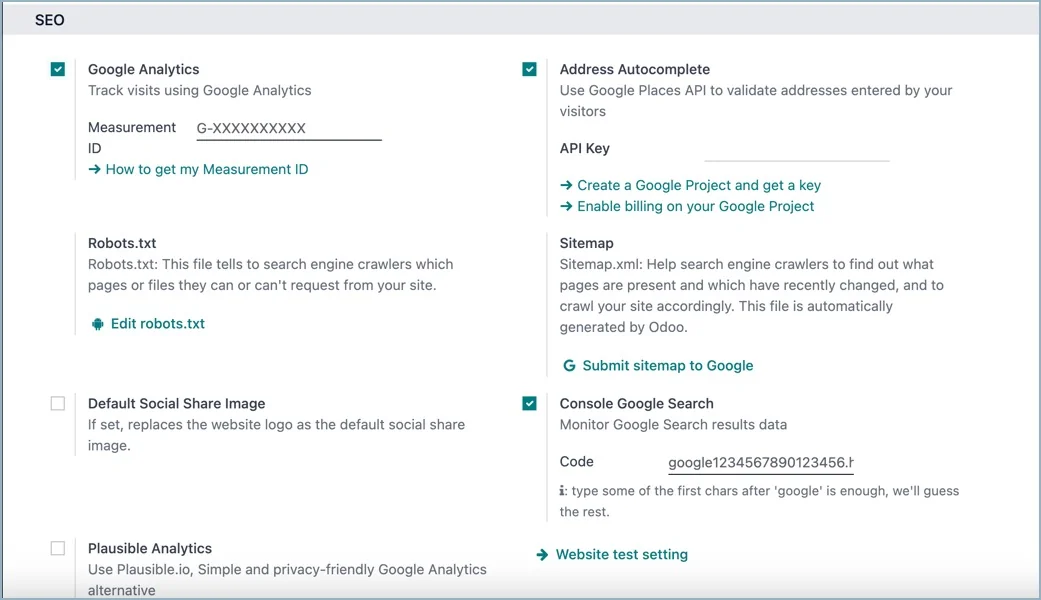
Setting up Google Search Console and Google Analytics (or Plausible) is important for measuring SEO performance. Odoo makes that very easy. From the SEO settings, you simply enter the details and Odoo will insert the correct codes for validation and measurement.
The ecosystem
There is one area where Odoo lags a few steps behind the other big names: the ecosystem. WordPress, as the most popular CMS, has many plugins that can make your life as an SEO specialist a bit easier. Odoo also has an App Store, but it is quite small compared to the number of WordPress plugins. So you may miss some options that are available in other systems.
There is also a positive side: I have seen so many WordPress websites become slow, insecure, and bloated by adding random plugins. That will not happen with Odoo.
Conclusion: SEO and Odoo go very well together
From an SEO perspective, Odoo delivers on its promise: it has all the basic features you need to have a website optimized for search, while enjoying close integration with your backend systems.
Is that all?
The technical part of the CMS is a great start, but not enough to win in organic search. You need relevant content, and you need to build expertise and authority through backlinks. Odoo will not do that for you, just as no other CMS will. SEO will still require a lot of work, but by using Odoo as your CMS, you can be sure that from a technical point of view, nothing stands in your way of being successful in Google.
About the author
Rick van Haasteren is an experienced SEO specialist and the founder of SiteGuru. Use SiteGuru to audit your website, monitor your organic visibility, and improve your rankings step by step.